
Douro Valley vs. Vinho Verde: Which Wine Region Should You Visit from Porto?
A balanced, traveller-focused comparison of Portugal's two great northern wine regions — to help you choose the right day trip from Porto.
Northern Portugal is home to two iconic wine regions, both within easy reach of Porto: the Douro Valley, the world's oldest demarcated wine region and a UNESCO World Heritage Site, and Vinho Verde, the lush green hills between the Minho and Douro rivers that produce Portugal's famously fresh "green wines". Travellers planning a day trip from Porto often wonder which region is the better choice. This guide compares them honestly — landscape, wine, winery experiences, food, river cruises and overall atmosphere — so you can pick the one that matches your interests. For context, you can also see our overview of the Douro Valley day trip from Porto and our list of the best day trips from Porto.
Location and Accessibility from Porto
Both regions sit within day-trip range of Porto, but they extend in different directions and take different amounts of time to reach.
Douro Valley
The Douro Valley stretches east of Porto along the Douro River, with most wineries clustered between Peso da Régua and Pinhão, the postcard heart of the region. By road, the drive from Porto to Pinhão takes around 1 hour 45 minutes via the A4 motorway. The famous Porto–Pocinho railway line also runs along the river, with scenic stops at Régua and Pinhão. The valley is wide and the wineries are scattered up steep slopes, so most travellers visit on a guided Douro Valley tour from Porto or with a private driver.
Vinho Verde Region
The Vinho Verde region begins almost immediately north of Porto and extends across the Minho — from Amarante in the south to the Spanish border in the north, including the towns of Guimarães, Braga, Ponte de Lima and Monção. Many producers are within a 45-minute drive from the city, which makes the region ideal for half-day visits or combined excursions with historic towns like Braga and Guimarães.

Landscape and Scenery
The two regions could hardly be more different visually, and that contrast is one of the main reasons travellers fall for one or the other.
Douro Valley — Dramatic Terraces
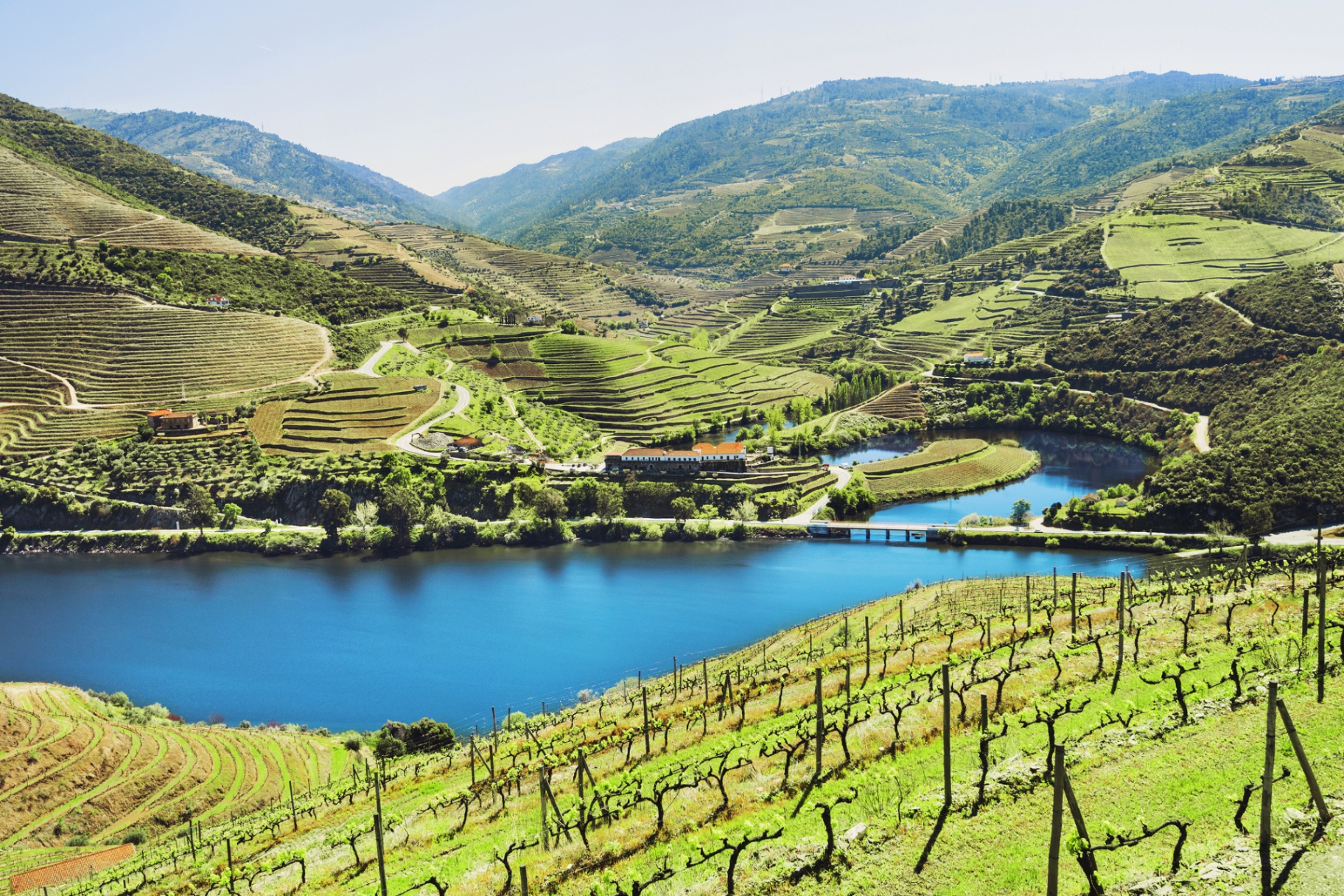
The Douro is famous for its hand-built schist terraces, carved into steep hillsides over centuries and now classified as a UNESCO World Heritage Site. The river snakes between dry, sun-baked slopes lined with vines, and the colour palette shifts from green in spring to gold and copper in autumn. Almost every bend in the road reveals a viewpoint, and the most iconic panoramas — over Pinhão, the Cima Corgo and the Casa de Mateus area — are among the most photographed landscapes in Portugal.
Vinho Verde — Lush Green Valleys
Vinho Verde, as the name suggests, is genuinely green. The climate is wetter and milder than the Douro, and the countryside is a patchwork of small family plots, granite villages, ancient stone houses and rivers cutting through forested hills. Vines are traditionally trained high on pergolas or along trellises so the cool, humid air can flow underneath. The scenery feels intimate and rural rather than monumental — picture-perfect for travellers who prefer soft, pastoral landscapes over dramatic, vertical ones.
Wine Styles and Grape Varieties
Both regions produce internationally acclaimed wines, but they belong to almost opposite ends of the wine spectrum.
Douro Wines
The Douro is best known for two great styles:
- Port wine — a fortified wine produced in styles ranging from young Ruby and Tawny to long-aged 10, 20, 30 and 40-Year Tawnies and rare Vintage Ports.
- DOC Douro table wines — powerful, structured reds and increasingly sophisticated whites made from native grapes such as Touriga Nacional, Touriga Franca, Tinta Roriz and Tinto Cão.
Douro wines are typically full-bodied, complex and built for ageing, with deep aromas of dark fruit, spice and schist minerality.
Vinho Verde Wines
Vinho Verde is the home of fresh, low-alcohol, slightly fizzy white wines made primarily from Alvarinho (especially in Monção and Melgaço), Loureiro, Arinto, Trajadura and Avesso. The wines are vibrant, citrus-driven and ideal as aperitifs or with seafood. The region also produces serious single-varietal Alvarinhos that rival some of the best whites in Iberia, along with smaller volumes of red and rosé Vinho Verde. If your palate prefers crisp, refreshing whites over rich, structured reds, this is your region.

Winery Visit Experiences
The character of a winery visit differs significantly between the two regions, both in style and in scale.
Douro Quintas
In the Douro, wineries are known as quintas and many sit high above the river with sweeping panoramic terraces. Visits typically include a tour of the cellar, an explanation of Port and DOC Douro wine production, and a structured tasting of three to five wines paired with views over terraced vineyards. Many quintas combine the visit with a traditional lunch — and on a well-organised day trip you can visit two contrasting estates: a more historic, classic Port house and a smaller, family-run boutique producer.
Vinho Verde Quintas and Solares
In Vinho Verde, visits often take place in beautiful manor houses (solares) and family quintas surrounded by gardens and pergola vineyards. Tastings tend to be more intimate, focused on white wines and Alvarinho in particular, frequently with cheese, sausage and bread from the area. The region's scale is smaller and more rural, which makes the visits feel personal — but it also means fewer multi-stop, full-day tour packages compared with the Douro.

River Cruises and Other Activities
Beyond the wine itself, the activities available in each region are quite different.
Douro Valley
- River cruises — short scenic cruises in Pinhão (around 1 hour) and longer day cruises from Porto towards Régua and Pinhão, often passing through the historic Crestuma-Lever and Carrapatelo locks.
- Vintage steam train in summer, running between Régua and Tua along one of the most scenic rail stretches in Europe.
- Panoramic viewpoints such as São Leonardo de Galafura and Casal de Loivos, with iconic views over the river bends.
- Helicopter rides, hot-air balloons and luxury cruises for those wanting a special occasion experience.
Vinho Verde Region
- Historic cities and villages — Guimarães (the "birthplace of Portugal"), Braga's religious heritage, the medieval bridges of Ponte de Lima and the fortress town of Valença.
- Active nature — kayaking and gentle walks along the Lima and Minho rivers, hiking sections of the Caminho Português to Santiago de Compostela.
- Manor-house stays in Solares de Portugal properties, a uniquely Minho experience.
- Small market towns with weekly fairs and craft traditions.
River cruises are the clear advantage of the Douro Valley; cultural and rural variety is where the Vinho Verde region stands out.
Food and Gastronomy
Both regions are deeply rooted in Portuguese gastronomy, but the table feels different in each.
Douro Cuisine
Douro cooking is hearty and built around grilled meats, slow-cooked stews and rich rice dishes. Lunch at a quinta typically features posta à mirandesa (a thick-cut grilled beef from the region), cabrito assado (roast kid), bacalhau in several traditional preparations and arroz de pato (duck rice), paired with structured Douro reds. Olive oil and almonds — both produced locally — feature in many dishes, and dessert often includes cristas, traditional pastries from Lamego.
Minho Cuisine
The Minho table is famously generous. Signature dishes include caldo verde (kale and potato soup), papas de sarrabulho, rojões (fried marinated pork), arroz de pica no chão (free-range chicken rice) and the irreplaceable bacalhau à minhota. Seafood is central in the coastal areas, and almost everything is paired with chilled Vinho Verde. Sweet specialities include pudim Abade de Priscos and the iconic almond cakes of Amarante.
Douro Valley vs. Vinho Verde: Side-by-Side Comparison
To make the choice easier, here is a quick comparison of how the two regions stack up across the criteria most travellers care about:
Which Region Should You Choose?
Both regions are wonderful, and travellers with more than one day in Porto can easily combine them. If you only have time for one, here is how to decide.
Best for First-Time Visitors
For most travellers visiting northern Portugal for the first time, the Douro Valley is the clear recommendation. It combines a UNESCO-listed landscape, two winery visits, a traditional lunch and a river cruise in Pinhão into a single, well-organised day. The scenery is iconic, the wines are immediately recognisable and a good small-group Douro Valley tour from Porto handles all the logistics for you.
Best for Wine Enthusiasts
Serious wine enthusiasts should ideally try both — but on a single trip, the Douro Valley wins on depth: centuries-old quintas, vertical tastings of aged Tawnies, vintage Ports and structured DOC Douro reds offer a wine experience that is hard to match anywhere in Europe. For those who already know the Douro and are looking for something different, the Vinho Verde region — especially around Monção and Melgaço — offers some of the most exciting Alvarinhos in Iberia and a fresh, food-friendly contrast.
Best for Photography and Scenery
For photographers, the Douro Valley is one of the most rewarding landscapes in Europe: dramatic terraces, river bends, soft morning light, golden autumn vines and famous viewpoints. The Vinho Verde region is more intimate and pastoral — beautiful for portrait-style images of granite villages, ancient stone bridges, pergola vines and lush green hillsides, but less spectacular from a single panoramic viewpoint.
Final Thoughts
Choosing between the Douro Valley and the Vinho Verde region really comes down to the kind of wine experience and landscape you are after. The Douro offers dramatic, UNESCO-listed scenery, world-famous fortified and structured wines, river cruises and a full-day format that is hard to beat for a first visit. Vinho Verde offers a softer, greener, more rural Portugal — fresh whites, intimate quintas and a strong sense of everyday Minho life, often combined with historic cities like Braga and Guimarães.
If this is your first wine day trip from Porto, the Douro Valley is almost always the better choice. If you have already explored the Douro, or if you simply love crisp whites and slower, rural travel, the Vinho Verde region will reward you. Either way, you are tasting some of the most distinctive wines in Europe in their original landscape.
Douro Valley Wine Tour: 2 Wineries, Lunch & River Cruise
Frequently Asked Questions
Ready to Discover the Douro Valley?
If the dramatic terraces, family quintas and river cruises of the Douro sound like your kind of day, explore our small-group and private Douro Valley tours from Porto. We handle every detail so you can focus on the landscape, the wine and the food.